The Age of Airships
For forty years, giant airships ruled the sky. Restored archival photographs of early dirigibles, the R-34, the Navy's ZR-1 over the White House, the USS Macon and the blimps of Lakehurst.
Before the airliner, there was the airship. For about forty years, from the first wobbly experiments around 1900 to the blimp patrols of the Second World War, these enormous lighter-than-air machines were the most spectacular thing in the sky. Crowds gathered wherever one appeared. Newspapers covered their flights the way they would later cover moon landings.
The photographs below come from the Library of Congress, the U.S. National Archives and NASA. We restored each one from the original archival scan, and every one is available as printable black and white wall art.
The experimenters
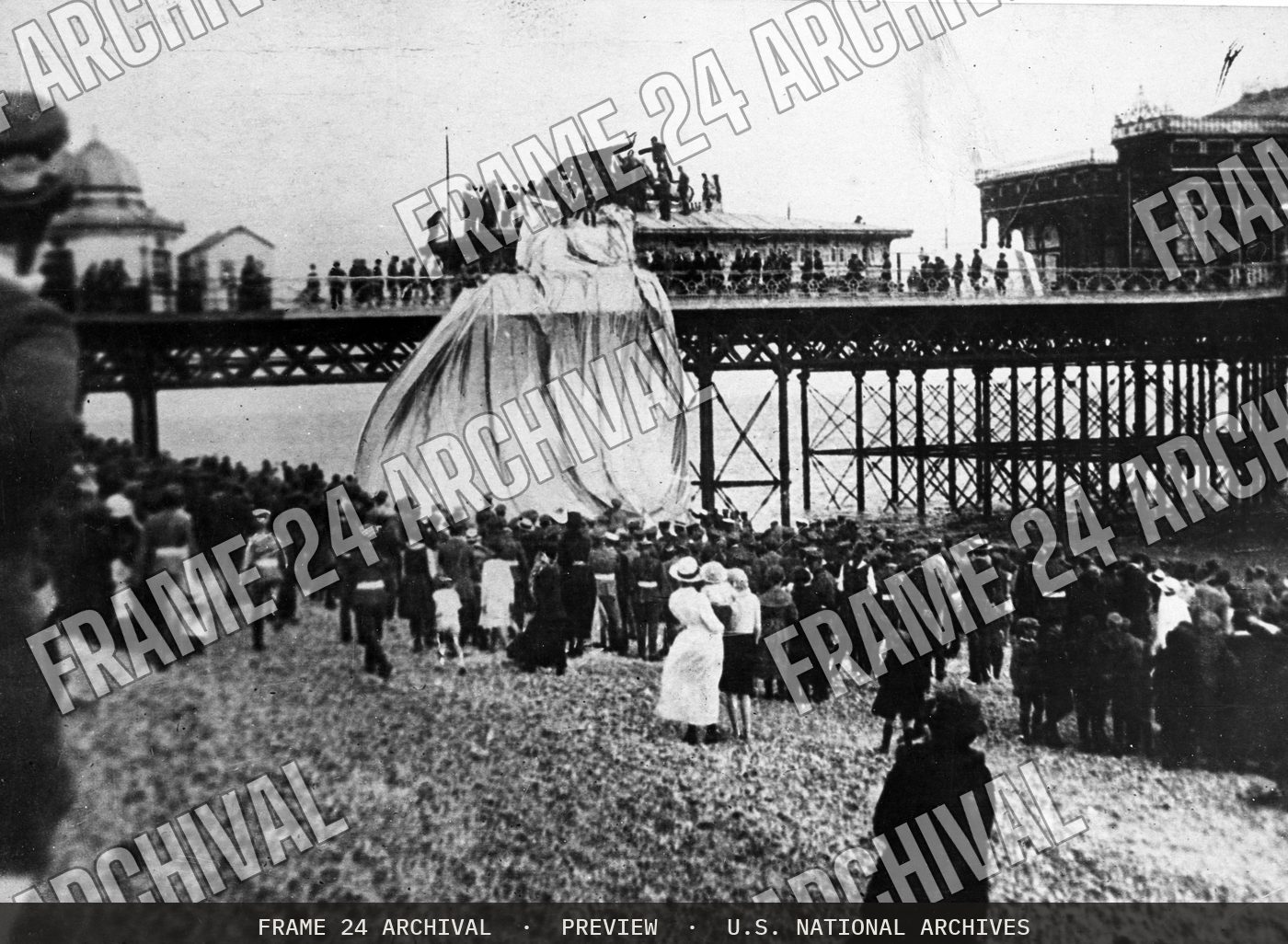
The first airships were part balloon, part bicycle, part leap of faith. Inventors in Europe and America bolted engines and propellers beneath gas bags and tried to steer them, with mixed results. Exhibitions and fairs were the natural stage, and passengers lined up for a few minutes aloft.


Zeppelin fever
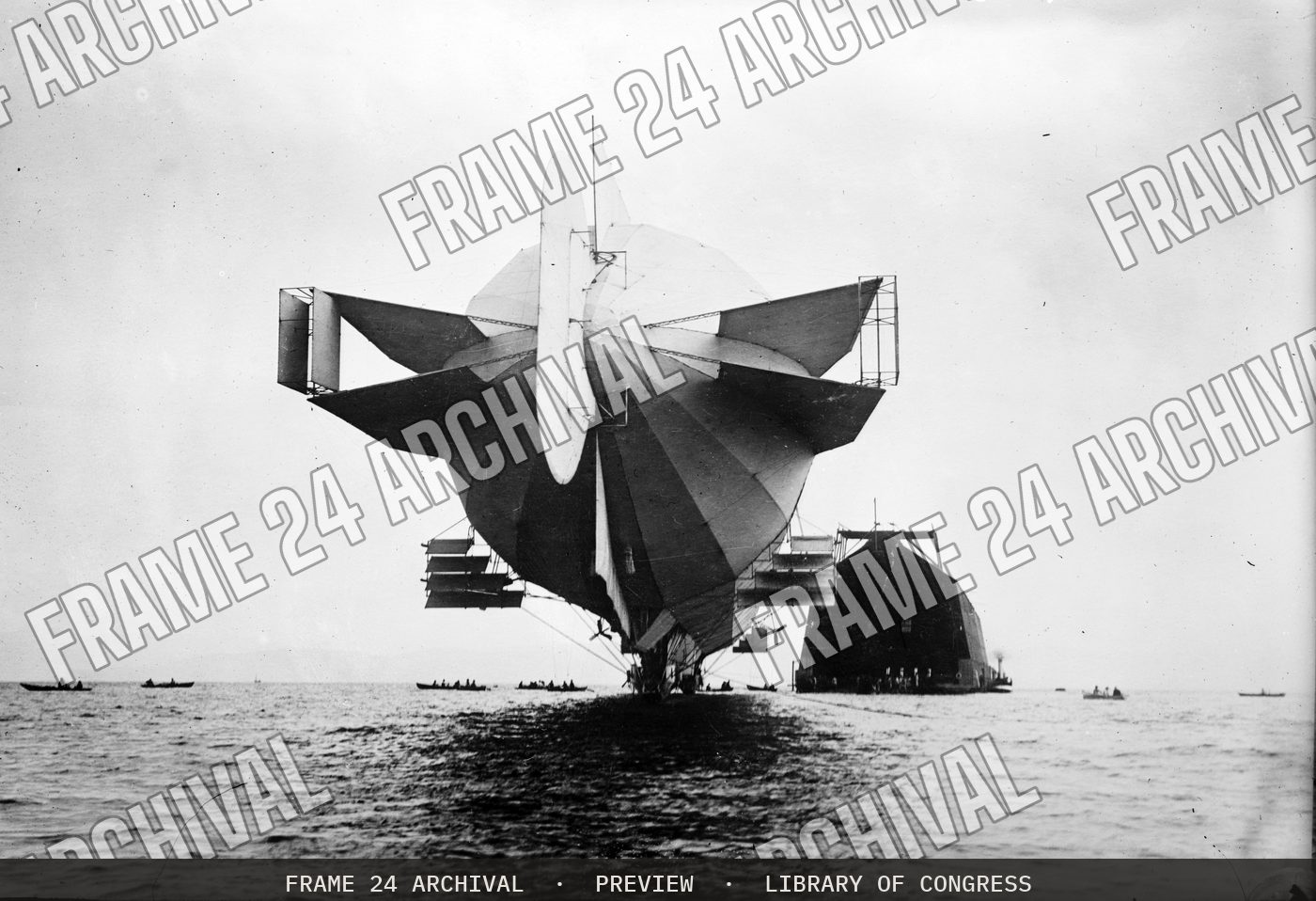
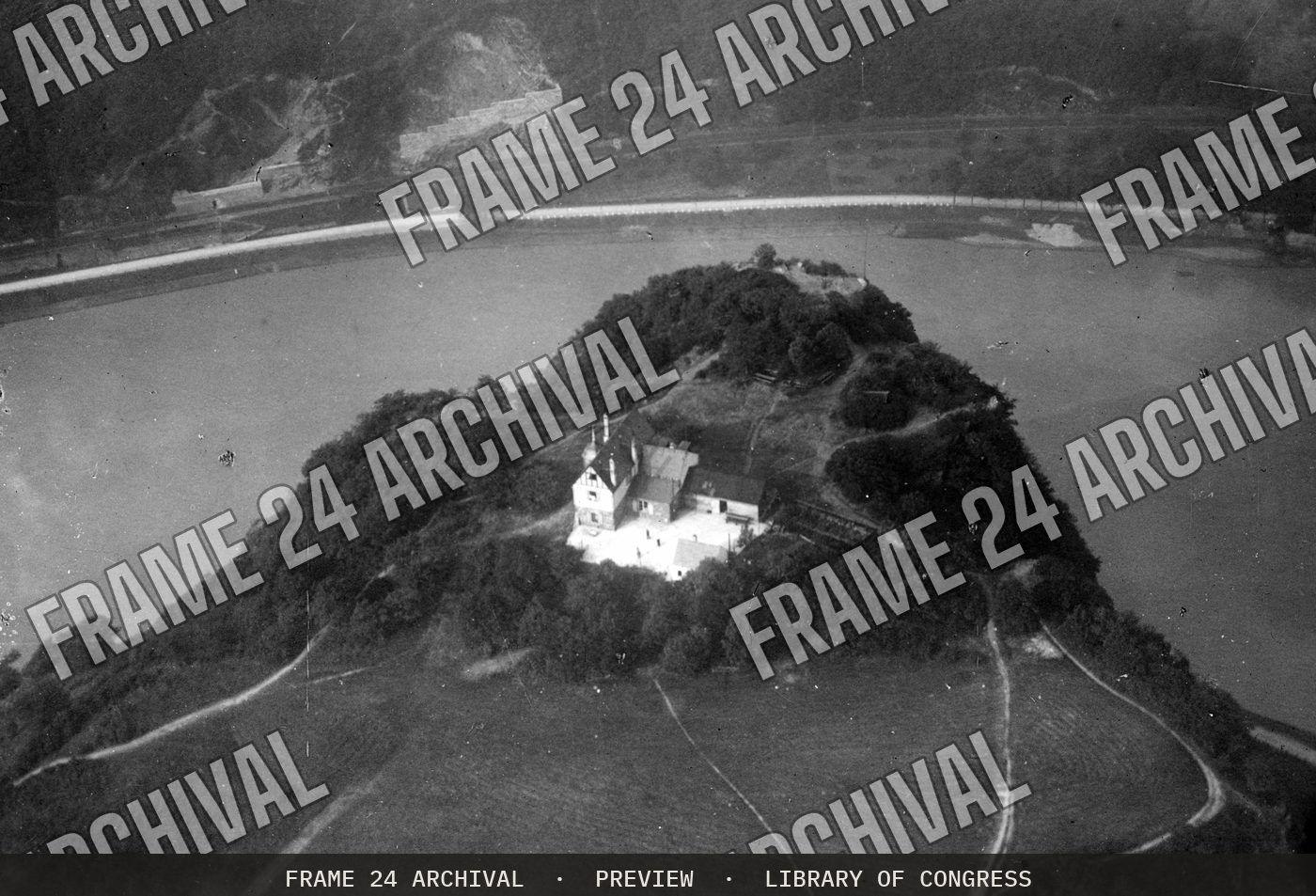
In Germany, Count Ferdinand von Zeppelin took a different approach: a rigid aluminum frame holding many separate gas cells, which let airships grow far larger than a simple balloon. By 1908 his ships were a national sensation, and soon after, the company was carrying paying passengers on sightseeing flights. Looking down on the Rhine from the window of an airship was, for a few years, the most modern experience a traveler could buy.
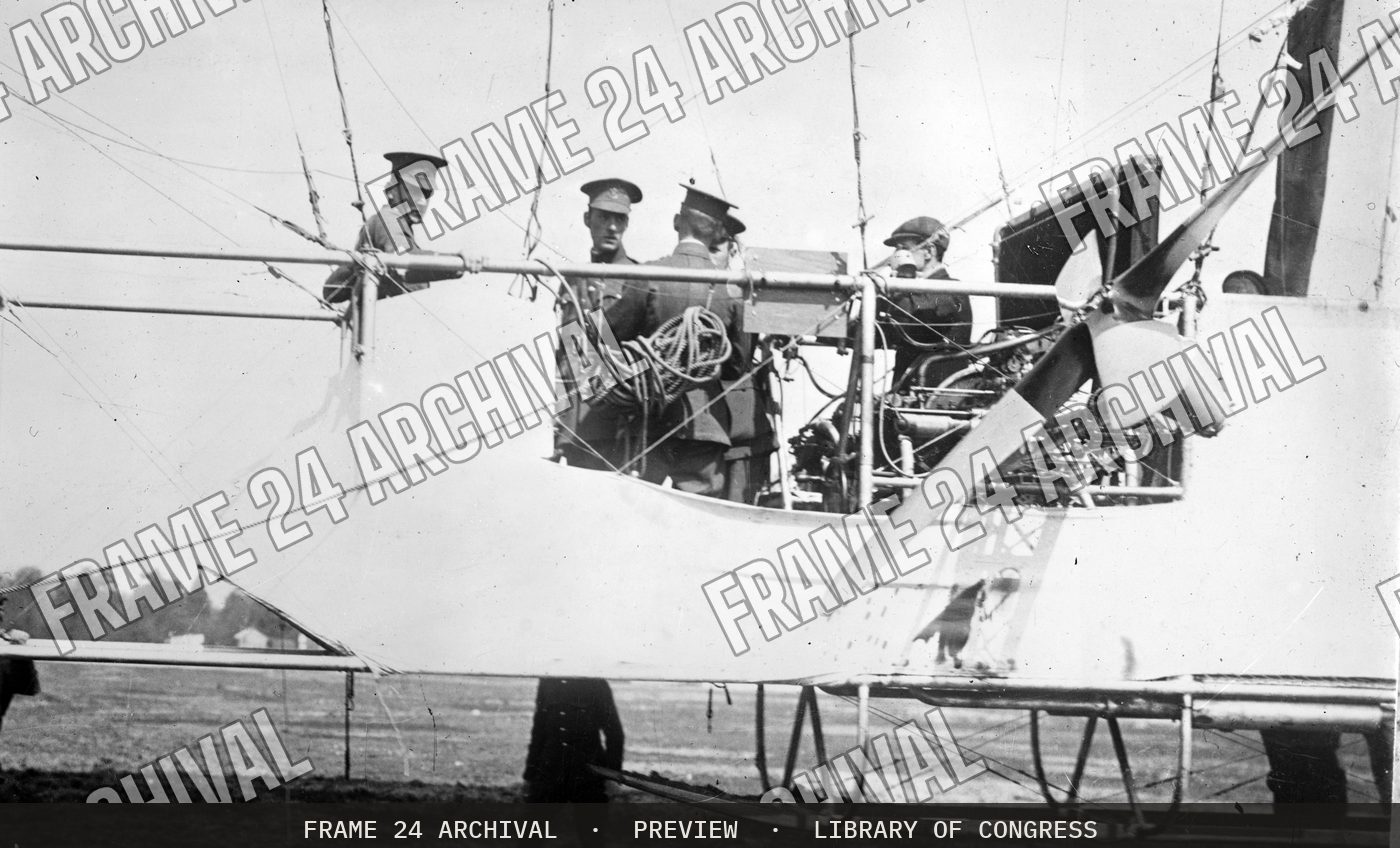
Britain answered with army airships of its own, built for scouting rather than sightseeing.
War and the Atlantic
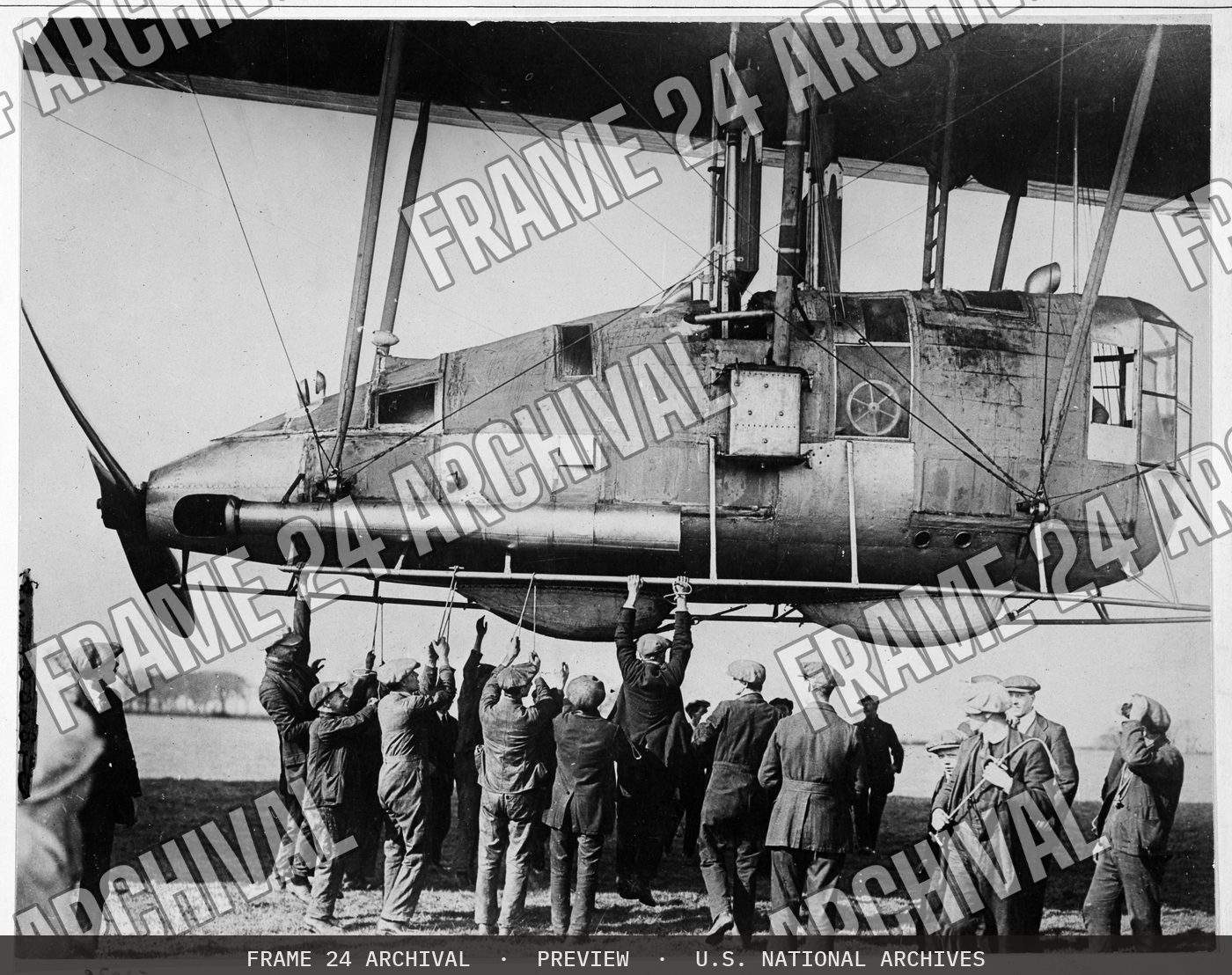
The First World War turned airships into weapons and scouts, and showed how vulnerable they were. When the war ended, the race was on to cross the Atlantic. In July 1919 the British airship R-34 flew from Scotland to Long Island, the first east-to-west crossing of the Atlantic by air, and then flew home again, completing the first round trip.
America's rigid airships
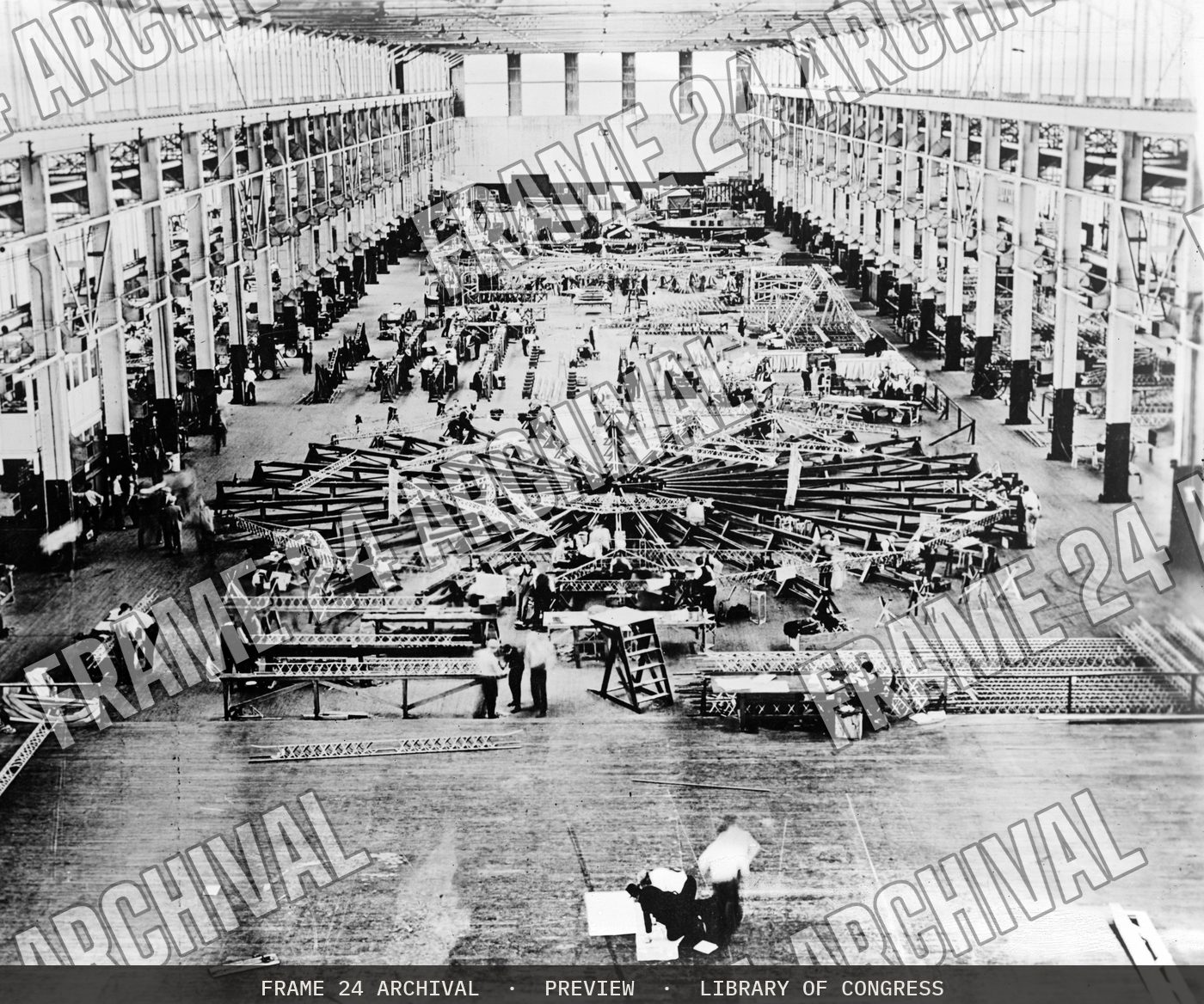
The U.S. Navy built its own giants. The first, the ZR-1, later named USS Shenandoah, was the first rigid airship built in the United States and among the first to be filled with helium instead of flammable hydrogen. In September 1923, just weeks after its first flight, it cruised over Washington, D.C., and a photographer caught it above the White House.

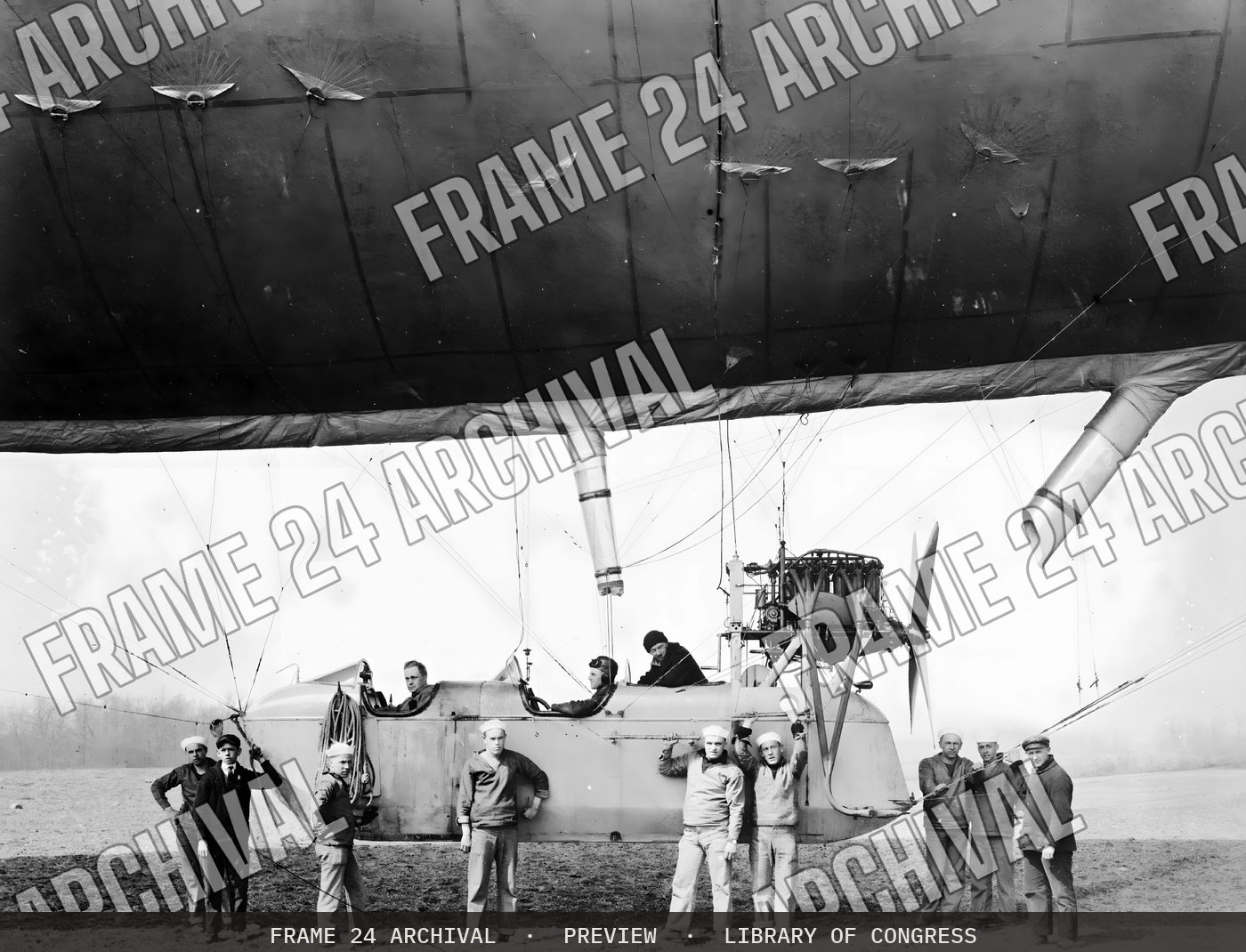
The Army flew smaller, non-rigid airships for training and patrol through the 1920s.

The Navy's biggest ships came next: the USS Akron and the USS Macon, each longer than two football fields and able to launch and recover small fighter planes in flight. The Macon was based at Naval Air Station Sunnyvale in California, in a hangar so large it was said to have its own weather. That building, Hangar One, still stands at Moffett Field today.

Both ships were lost at sea, the Akron in 1933 and the Macon in 1935. After that, the Navy stopped building rigid airships.
The blimps' war
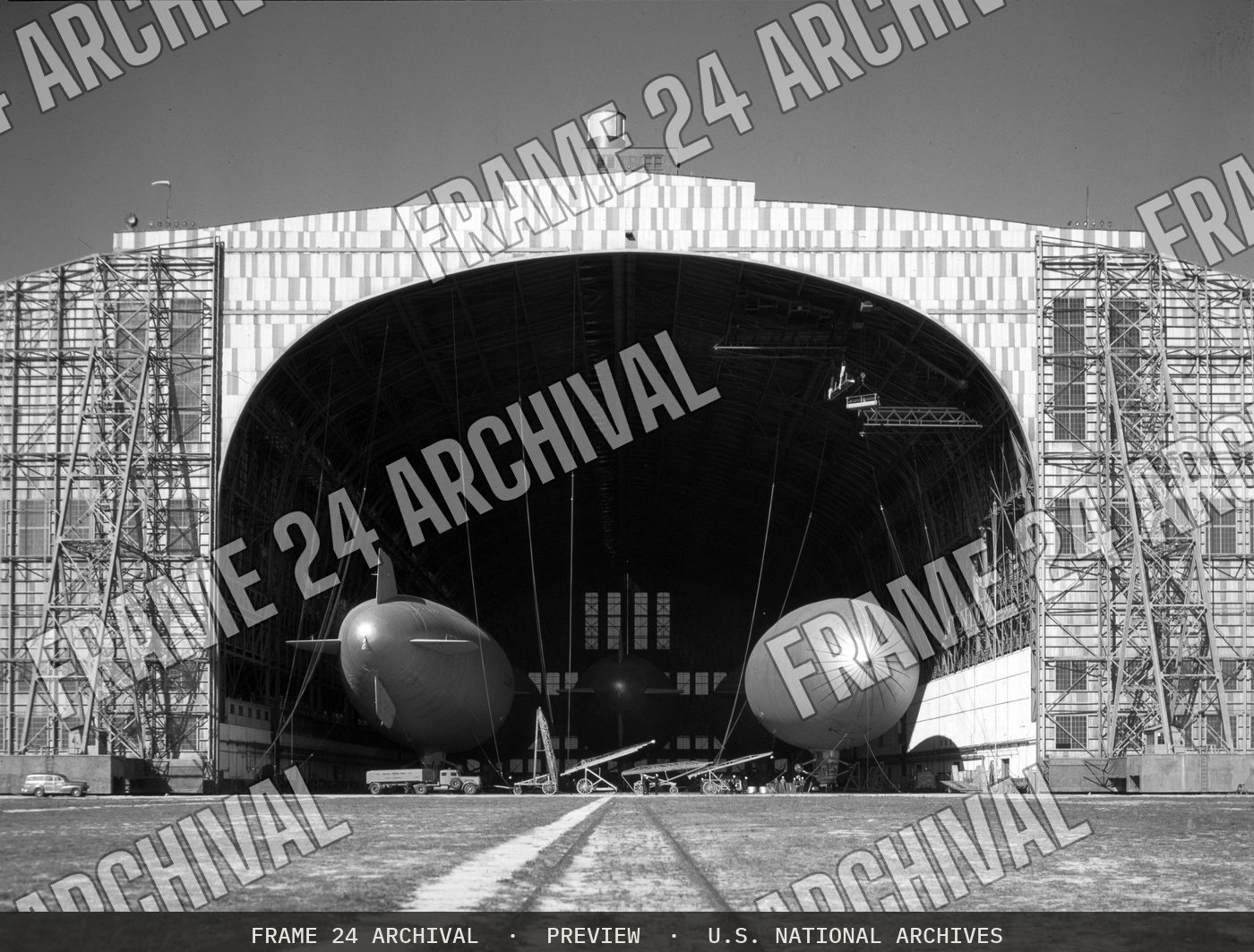
Smaller blimps outlasted their giant cousins. During the Second World War, Navy K-type blimps flew long patrols over the Atlantic and Pacific coasts, escorting convoys and hunting submarines. Many were based at Lakehurst, New Jersey, in hangars built for the great rigid airships of the decade before.
Bring one home
Airship photographs make striking wall art: huge, graphic shapes against open sky, with a story most people have never heard. Each photo above is restored, sized for standard frames and available as an instant download. See every early-flight photograph in our Aviation collection, or browse the gift guide for the aviation fan on your list.